

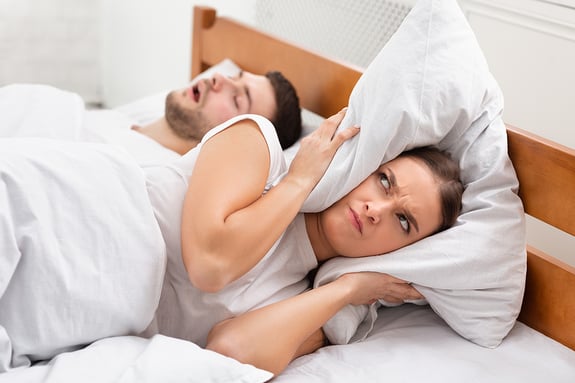
If snoring is keeping you or your partner awake at night, your sleep position may be part of the problem.
Adjustable beds can help reduce snoring by raising the upper body, which may make nighttime breathing easier for some sleepers.
This can be especially helpful for people who snore more when lying flat on their backs. An adjustable base also makes it easier to change your sleep angle without relying on stacked pillows that can shift during the night.
While an adjustable bed cannot address every cause of snoring or replace medical care for conditions such as sleep apnea, it can offer a more flexible way to create a comfortable sleep setup.
What Causes Snoring While You Sleep?
Snoring happens when airflow through the nose or throat becomes partially restricted during sleep. As air moves through a narrowed passage, nearby tissues can vibrate and create the familiar snoring sound.
Several factors can contribute, including:
- Sleeping position: Snoring is often more common on the back because the tongue and soft tissues can shift toward the throat.
- Nasal congestion: Allergies, colds, and other forms of congestion can make nasal breathing more difficult.
- Relaxed throat muscles: The muscles around the airway naturally relax during sleep and may narrow the breathing passage.
- Lifestyle factors: Alcohol use, smoking, weight changes, and certain medications may contribute to snoring.
- Sleep-related breathing conditions: Persistent or severe snoring can sometimes be associated with obstructive sleep apnea.
Because body position can affect airflow, changing how you sleep may help reduce snoring in some cases.
How Does Sleep Position Affect Snoring?
Sleep position can make a noticeable difference in how easily air moves through the upper airway.
When you sleep flat on your back, gravity can allow the tongue and soft tissues around the throat to shift backward. For some sleepers, this can make the airway narrower and increase the chance of snoring.
Side sleeping may help because the tongue and surrounding tissues are less likely to fall directly toward the back of the throat. However, not everyone finds side sleeping comfortable for an entire night.
That is where an adjustable base can offer another option. Instead of changing from your back to your side, you can raise the upper part of the bed and create a gentle incline while still sleeping in a position that feels natural.
This can be especially helpful for people who:
- Prefer sleeping on their back
- Have trouble staying on their side
- Find multiple pillows uncomfortable
- Want more control over their sleeping angle
There is no single sleep position that works for everyone, but having more options can make it easier to find one that supports both comfort and better breathing.
How Can an Adjustable Bed Help With Snoring?
Adjustable beds let you change the angle of the mattress rather than sleeping on one flat surface. For people whose snoring is affected by lying flat, this added flexibility can be useful.
1. Raising the Upper Body May Make Breathing Easier
Sleeping completely flat can allow the tongue and soft tissues to shift toward the back of the throat.
Raising the head and upper body may help reduce that effect and create a more comfortable breathing position. Unlike a stack of pillows, an adjustable base supports a larger area of the body and can be changed in small increments.
This also helps avoid the bent or uneven position that can happen when several pillows are piled underneath the head and neck.
2. You Can Find a More Comfortable Sleep Position
Some sleepers may feel better with only a slight incline, while others may prefer a more noticeable adjustment.
An adjustable base gives you the flexibility to try different positions rather than committing to one fixed setup. You can make small changes and see what feels most comfortable throughout the night.
Many models also allow you to raise the legs or bend the knees. Those adjustments are not specifically intended to reduce snoring, but they can improve overall comfort and make it easier to settle into a position you can maintain.
3. Couples Can Choose Different Sleep Positions
Snoring can disrupt sleep for both people sharing a bed.
Split adjustable bases allow each partner to control their side independently. One person can sleep at an incline while the other keeps a flatter position, making it easier to accommodate different comfort preferences.
This can be particularly useful when one person is trying to reduce snoring while the other prefers a traditional sleeping position.
Adjustable Bed vs. Wedge Pillow for Snoring
A wedge pillow and an adjustable bed can both raise the upper body, but they provide different levels of flexibility.
A wedge pillow is a simple way to try sleeping at an incline. It may work well for someone who wants a low-cost option or does not need to change positions frequently.
However, wedge pillows have some limitations. The angle is fixed, and the pillow may not support the entire upper body evenly. Some sleepers also find that they slide down during the night or have trouble getting comfortable around the shoulders and neck.
An adjustable bed offers more control because you can change the incline whenever you want. You can also return the bed to a flat position or adjust other areas of the base depending on what feels best.
An adjustable base may be a better fit if you:
- Want multiple position options
- Share the bed with a partner who has different preferences
- Use the bed for reading, watching TV, or relaxing
- Want a more stable alternative to stacked pillows
- Prefer being able to make small changes to your position
Can an Adjustable Bed Help With Sleep Apnea?
An adjustable bed may improve sleep positioning, but it is not a treatment or cure for sleep apnea.
Obstructive sleep apnea occurs when the airway repeatedly narrows or closes during sleep, interrupting normal breathing. Snoring can be one symptom, but not everyone who snores has sleep apnea.
Consider speaking with a healthcare provider if snoring is accompanied by:
- Gasping or choking during sleep
- Noticeable pauses in breathing
- Very loud or persistent snoring
- Excessive daytime sleepiness
- Regularly waking up feeling unrested
A healthcare professional can help determine whether further evaluation or treatment is needed.
What Should You Look for in an Adjustable Bed?
If you are considering an adjustable bed, look for features that make it easy to create a comfortable setup.
Independent head adjustment:
This allows you to gradually raise the upper portion of the bed and find a position that feels comfortable.
Simple controls:
Wireless remotes or app-based controls make position changes easier.
Preset positions:
Some bases include common settings for sleeping, reading, or relaxing.
Split options:
These are especially useful for couples who prefer different bed positions.
Mattress compatibility:
The mattress should flex with the base while still providing the support and comfort you need.
Smooth adjustment:
A base that moves gradually can make it easier to find a comfortable position without making large changes all at once.
The right choice depends on your sleep habits, preferred mattress feel, bedroom setup, and comfort preferences.
Find an Adjustable Bed That Supports Better Sleep
Your sleep position can make a difference in how comfortable you feel at night. If lying flat contributes to snoring or discomfort, an adjustable bed may give you more flexibility to find a position that works better for you.
At Land of Sleep, our team can help you compare adjustable beds based on your sleep habits, comfort preferences, and support needs. Visit one of our Sarasota or Venice mattress store locations to try different adjustable bed positions and find the right setup for a more comfortable night's sleep.
Frequently Asked Questions About Adjustable Beds and Snoring
Do adjustable beds help reduce snoring?
They may. Raising the upper body can improve sleep positioning and may reduce snoring for some people, especially those who snore more when lying flat.
What is the best adjustable bed position for snoring?
A slight incline is a good place to start. The ideal position varies by person, so adjust gradually until you find a comfortable angle.
Is an adjustable bed better than extra pillows for snoring?
It can be. An adjustable base provides more even support and is less likely to shift during the night than stacked pillows.
Is a wedge pillow as effective as an adjustable bed for snoring?
A wedge pillow may help some sleepers by creating an incline, but an adjustable bed offers more flexibility because the angle can be changed as needed.
Does side sleeping help with snoring?
For some people, yes. Side sleeping may reduce the tendency of the tongue and soft tissues to move toward the back of the throat.
Can an adjustable bed cure sleep apnea?
No. An adjustable bed does not cure sleep apnea and should not replace medical evaluation or treatment.
Can couples use an adjustable bed if only one person snores?
Yes. A split adjustable base allows each person to choose a different position, which can be helpful when one partner prefers elevation and the other does not.